Johor–Singapore RTS Link: Economic Benefits and Property Impact May Take Time
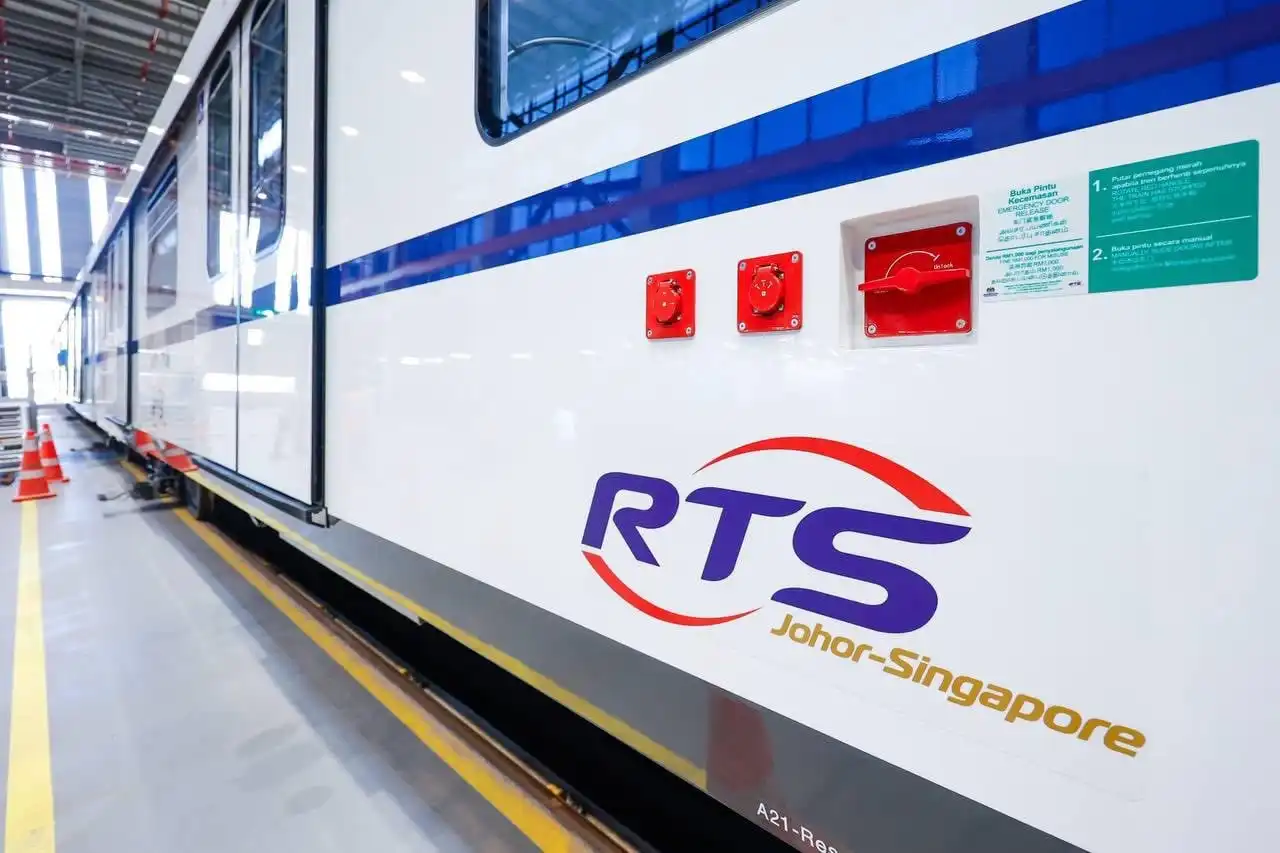
The Johor–Singapore Rapid Transit System (RTS) Link is expected to begin passenger services in February 2027, introducing a new cross-border rail connection that could gradually reshape commuting patterns, consumer spending and residential choices between Johor Bahru and Singapore.
The revised opening target was announced by the transport authorities of both countries on 2 October 2026, following additional requirements for system testing, independent safety certification and regulatory approval.
The railway will connect Bukit Chagar in Johor Bahru with Woodlands North in Singapore, offering an estimated five-minute journey between the two stations and capacity for up to 10,000 passengers per hour in each direction.
Beyond transport convenience, the RTS Link has generated wider discussion about its potential economic benefits.
In an August 2026 commentary published by Singapore’s The Business Times, Adam Romzi and Song Yunlong argued that improved cross-border connectivity could eventually raise Singaporeans’ purchasing power, productivity and real incomes.
However, the benefits are unlikely to appear immediately or be distributed equally across households, businesses and property markets.
Why the RTS Link Matters Beyond Shorter Travel Times
The RTS Link represents a significant change in how people may travel between Johor Bahru and Singapore.
Unlike the existing road-based crossings, the railway will provide a dedicated passenger connection with customs, immigration and quarantine facilities at both terminals.
Travellers will clear the immigration requirements of both countries before boarding, removing the need for a second immigration clearance upon arrival.
This arrangement could make cross-border journeys more predictable, particularly for regular commuters who currently face variable road congestion.
The anticipated five-minute rail journey, however, covers only the station-to-station segment.
Passengers must still account for travel to the departure station, immigration procedures, waiting times and onward journeys after arrival.
In a parliamentary reply dated 4 November 2026, Singapore’s Ministry of Transport also emphasised that actual RTS utilisation and its effect on Causeway traffic will depend on commuter behaviour and the fares eventually charged.
The practical benefits will therefore become clearer only after passenger services begin.
Lower Travel Friction Could Expand Consumer Choices
One of the economic arguments surrounding the RTS Link concerns easier access to goods and services across the border.
Singapore residents already travel to Johor Bahru for shopping, dining, recreation and other activities, partly because of differences in prices and purchasing power.
A more convenient rail connection could allow some households to make these trips more frequently without relying on private vehicles or road-based public transport.
For Singaporean consumers, easier access to comparatively affordable goods and services may increase the range of spending choices available.
Businesses in Johor Bahru could benefit from additional cross-border visits, particularly in retail, food and beverage, entertainment and personal services.
However, lower travel friction does not mean every household will experience meaningful savings.
The actual financial benefit will depend on RTS fares, connecting transport costs, exchange rates, spending patterns and the frequency of travel.
For someone making occasional shopping trips, the impact may be modest. For regular travellers, improvements in journey reliability could be more valuable than direct spending savings.
Productivity Gains Depend on More Than Railway Capacity
Improved mobility can also contribute to economic efficiency by reducing uncertainty and making it easier for people to reach employment, businesses and services.
For cross-border workers, predictable transport arrangements may reduce time spent managing travel disruptions.
Employers could benefit from more reliable staff movements, while businesses operating across Johor and Singapore may find it easier to coordinate meetings and day-to-day activities.
Nevertheless, the RTS Link alone cannot resolve every barrier to cross-border employment.
The availability of suitable jobs, immigration permissions, employment regulations, transport connections and household responsibilities will continue influencing individual decisions.
The railway also does not directly connect every major employment district in Johor or Singapore.
Its wider productivity benefits will depend partly on how effectively passengers can transfer to existing bus, rail and other transport networks.
The Johor–Singapore Special Economic Zone (JS-SEZ) adds another dimension by encouraging investment and business cooperation across the two economies.
Together, improved transport and economic integration could support longer-term growth, although these outcomes depend on actual business activity rather than infrastructure announcements alone.
What the RTS Link Could Mean for Johor Bahru Housing
For Johor Bahru’s residential market, the RTS Link introduces a potentially important accessibility improvement.
Living in Johor while working in Singapore may become more practical for certain households, particularly those whose workplaces are accessible through Singapore’s public transport network.
Bukit Chagar and the surrounding Johor Bahru city centre are likely to receive particular attention because of their proximity to the Malaysian RTS terminal.
However, the housing market should not be viewed as a single investment category.
Properties within convenient reach of the terminal may appeal to regular cross-border commuters, while larger homes in suburban Johor may remain attractive to families prioritising space and neighbourhood amenities.
Purchase affordability also differs considerably between Malaysian households, Singaporean purchasers and Malaysians earning Singapore-dollar incomes.
For investors, higher accessibility does not guarantee stronger rental yields.
Johor Bahru already has a substantial pipeline of new residential developments, including numerous serviced apartments targeting similar cross-border demand.
This additional supply could limit rental growth in some locations even as transport connectivity improves.
Johor’s Residential Supply Remains an Important Consideration
According to EdgeProp EPIQ market data published in October 2026, Johor is expected to complete nearly 115,000 homes across 609 projects by 2030.
Johor Bahru alone accounts for approximately 70,460 of these units.
This represents substantial new housing supply entering the market during the period when the RTS Link and JS-SEZ are expected to support economic activity.
While growing employment and improved connectivity may increase the number of potential residents, housing absorption will depend on household formation, income levels and actual occupancy demand.
Commercial-titled serviced apartments deserve particular attention because Johor Bahru has already experienced a significant overhang in this segment.
Buyers should therefore evaluate individual projects based on practical station access, current market rents, maintenance charges, completed transactions and competing developments.
A property marketed as being near the RTS Link is not necessarily within convenient walking distance of the station.
Similarly, projected rental income should not be treated as guaranteed simply because the railway is approaching completion.
RTS Benefits Will Become Clearer After Operations Begin
The RTS Link’s economic significance extends beyond a five-minute train journey.
By improving connectivity between two closely linked economies, it could gradually influence shopping habits, commuting decisions, business activity and the locations where people choose to live.
However, the immediate priority remains safe and reliable operations.
As of November 2026, RTS Operations expects to complete its final system tests and trial runs by 31 December, followed by independent safety certification and the required approvals.
The current passenger service target remains February 2027, subject to these processes.
For Johor Bahru, the longer-term opportunity is to convert better transport accessibility into sustainable economic activity and genuine residential demand.
The RTS Link may improve how easily people move between Johor and Singapore, but lasting economic and property-market benefits will depend on actual usage, affordable travel, employment growth and the ability of housing supply to match real occupier needs.