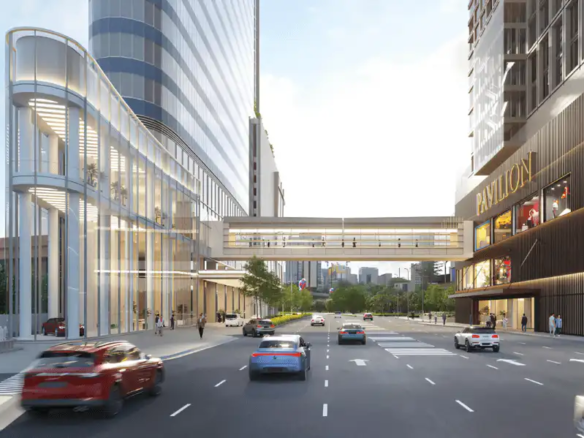
Kuala Lumpur Named Among Frommer’s Best Places to Go in 2027
Kuala Lumpur has earned a place on Frommer’s Best Places to Go in 2027 list, with the upcoming East Coast Rail Link (ECRL), the city’s distinctive skyline and its cultural diversity contributing to its international travel appeal.
The recognition was highlighted in early November 2026 by Frommer’s editor-in-chief Jason Cochran, who identified Kuala Lumpur as a destination combining modern urban experiences with opportunities to explore Malaysia’s wider natural and cultural attractions.
A central part of the assessment is the 665km ECRL, which is expected to improve rail connectivity between the Klang Valley and Peninsular Malaysia’s east coast.
The travel publisher also highlighted familiar Kuala Lumpur landmarks, including the Petronas Twin Towers and Merdeka 118, alongside the city’s ability to accommodate international visitors.
For Malaysia’s tourism industry, the recognition arrives as major transport improvements are approaching completion, potentially making Kuala Lumpur a more convenient starting point for travellers exploring different parts of the country.
Frommer’s Recognises Kuala Lumpur’s Growing Travel Appeal
Frommer’s is an established international travel publishing brand founded by Arthur Frommer in 1957.
Known for its travel guidebooks, destination recommendations and practical travel information, the publisher has long focused on helping travellers explore destinations independently.
Its Best Places to Go in 2027 selection introduces Kuala Lumpur to an international audience considering destinations for the coming year.
Cochran highlighted the city’s combination of contemporary infrastructure, cultural diversity and established tourism facilities.
Kuala Lumpur offers a mixture of modern shopping districts, historic neighbourhoods, traditional markets, diverse dining experiences and major architectural landmarks.
Visitors can move between the commercial environment of KLCC and Bukit Bintang and older parts of the city around Chinatown, Central Market and Merdeka Square.
This variety is an important part of Kuala Lumpur’s appeal, particularly for international travellers looking for a city that combines urban convenience with local cultural experiences.
The latest recognition reflects these existing characteristics while drawing attention to the potential improvements in regional travel brought by the ECRL.
ECRL Could Make Malaysia’s East Coast More Accessible
The East Coast Rail Link is one of Malaysia’s largest transport infrastructure projects, with a planned network spanning approximately 665km.
Its first operational phase will connect Terminal Bersepadu Gombak in Selangor with Kota Bharu in Kelantan, passing through parts of Pahang and Terengganu.
The planned express journey between Gombak and Kota Bharu is expected to take approximately four hours.
This could offer travellers an alternative to long-distance road journeys, particularly those interested in visiting the east coast’s beaches, traditional towns and natural landscapes.
Frommer’s highlighted the potential for international visitors to extend a Kuala Lumpur holiday into a wider journey across Peninsular Malaysia.
Importantly, the ECRL is not yet operating commercially as of early November 2026.
The Gombak–Kota Bharu section was originally scheduled to begin operations in January 2027, although Malaysian authorities have explored an earlier December 2026 commencement, subject to the completion of testing and safety approvals.
The subsequent connection towards Port Klang is scheduled for a later phase.
For travellers, the full benefits of the railway will depend on confirmed service schedules, fares, station transfers and onward transport options.
Merdeka 118 and Petronas Twin Towers Define the Modern Skyline
Kuala Lumpur’s skyline remains one of its strongest international tourism identifiers.
The Petronas Twin Towers have represented the city’s modern development for nearly three decades, becoming one of Malaysia’s most recognisable architectural attractions.
More recently, Merdeka 118 has introduced another major landmark to the capital.
Standing approximately 679 metres tall, Merdeka 118 is the world’s second-tallest building and forms part of a broader mixed-use precinct near Kuala Lumpur’s historic centre.
The area combines modern commercial development with proximity to established cultural and heritage attractions, including Stadium Merdeka and the surrounding city neighbourhoods.
For international visitors, these landmarks offer an accessible introduction to Kuala Lumpur’s changing urban identity.
However, the city’s attraction extends beyond its skyscrapers.
Food culture, multicultural communities, historic buildings and local neighbourhood experiences remain equally important to the visitor experience.
Kuala Lumpur as a Gateway to Wider Malaysian Travel
The ECRL’s tourism relevance is not limited to the destinations along its railway alignment.
For visitors arriving through Kuala Lumpur International Airport, the capital often serves as the first stop before travelling elsewhere in Malaysia.
A more connected rail network could make it easier to combine several destinations within one itinerary.
Travellers could spend time exploring Kuala Lumpur before continuing towards destinations such as Bentong, Kuantan, Kuala Terengganu or Kota Bharu, depending on the available services and station connections.
This may be especially useful for visitors who prefer rail travel over self-driving or arranging multiple long-distance bus journeys.
Nevertheless, Terminal Bersepadu Gombak is located outside Kuala Lumpur’s central tourism districts.
Visitors staying in KLCC, Bukit Bintang or other city-centre neighbourhoods will still need to account for transfers and travel time to the ECRL terminal.
The quality of these connections will influence how convenient the railway becomes for international tourists.
What the Recognition Means for Kuala Lumpur’s Visitor Economy
International travel recognition can increase awareness of a destination among prospective visitors, especially when it comes from an established travel publisher.
For Kuala Lumpur, additional visibility may benefit the wider hospitality and visitor economy, including hotels, restaurants, shopping centres, cultural attractions and local transport operators.
The timing is relevant as the city continues introducing new hospitality developments, retail destinations and public transport infrastructure.
However, inclusion in a travel recommendation list should not be treated as evidence of an immediate increase in tourist arrivals, hotel occupancy or commercial property values.
Those outcomes depend on actual visitor numbers, spending patterns, available accommodation, transport reliability and wider economic conditions.
The more practical significance is that Kuala Lumpur is being recognised not only as a standalone urban destination but also as a starting point for exploring the rest of Peninsular Malaysia.
That positioning could become increasingly relevant as the ECRL begins carrying passengers.
Kuala Lumpur Enters 2027 With a Broader Tourism Proposition
Frommer’s inclusion of Kuala Lumpur among its Best Places to Go in 2027 provides international recognition for a city that continues to develop its infrastructure while maintaining a diverse cultural identity.
The Petronas Twin Towers, Merdeka 118, established shopping districts and historic neighbourhoods already offer visitors a substantial urban experience.
The upcoming ECRL could add another dimension by improving access to destinations beyond the Klang Valley.
For Kuala Lumpur, the opportunity in 2027 is to become an even more practical gateway to Malaysia, connecting the capital’s established attractions with the country’s wider regional tourism experiences.
The success of that proposition will ultimately depend on the railway’s operational readiness, convenient onward connections and the quality of the visitor experience.