Johor Plans Nearly 115,000 New Homes by 2030 as RTS and JS-SEZ Drive Demand
Johor’s residential property market is preparing for a substantial expansion, with nearly 115,000 new homes across 609 projects expected to be completed by 2030, supported by industrial investment, the Johor–Singapore Special Economic Zone (JS-SEZ) and the Johor Bahru–Singapore Rapid Transit System (RTS) Link.
According to EdgeProp EPIQ market data published in October 2026, Johor Bahru will account for approximately 70,460 of these homes across 244 developments, making it the largest contributor to the state’s upcoming residential supply.
The expansion comes as Johor attracts new investments in manufacturing, logistics, data centres and higher-value industries, creating potential demand from workers, families and cross-border commuters.
However, the size of the development pipeline also raises an important question: can employment and population growth absorb the new supply without creating another cycle of residential oversupply?
Johor Bahru Accounts for More Than 60% of Upcoming Homes
The projected 115,000-unit pipeline is spread across Johor, but housing development remains heavily concentrated in Johor Bahru.
With approximately 70,460 units planned, the district represents more than 60% of the state’s expected new homes despite accounting for only about 40% of the projects.
This concentration reflects Johor Bahru’s position as the state’s principal employment centre, its proximity to Singapore and the growing importance of cross-border connectivity.
Landed housing remains a significant part of Johor’s development landscape. Of the 609 projects identified, 507 are non-stratified residential developments.
These generally cater to households seeking larger living spaces, family accommodation and longer-term owner-occupation.
According to Department of Statistics Malaysia projections cited in the market report, Johor’s population could increase from approximately 4.22 million in 2026 to 4.49 million by 2030.
This projected demographic expansion provides a potential foundation for housing demand, although population growth alone cannot determine how quickly new properties will be absorbed.
RTS Link Strengthens the Johor–Singapore Commuter Market
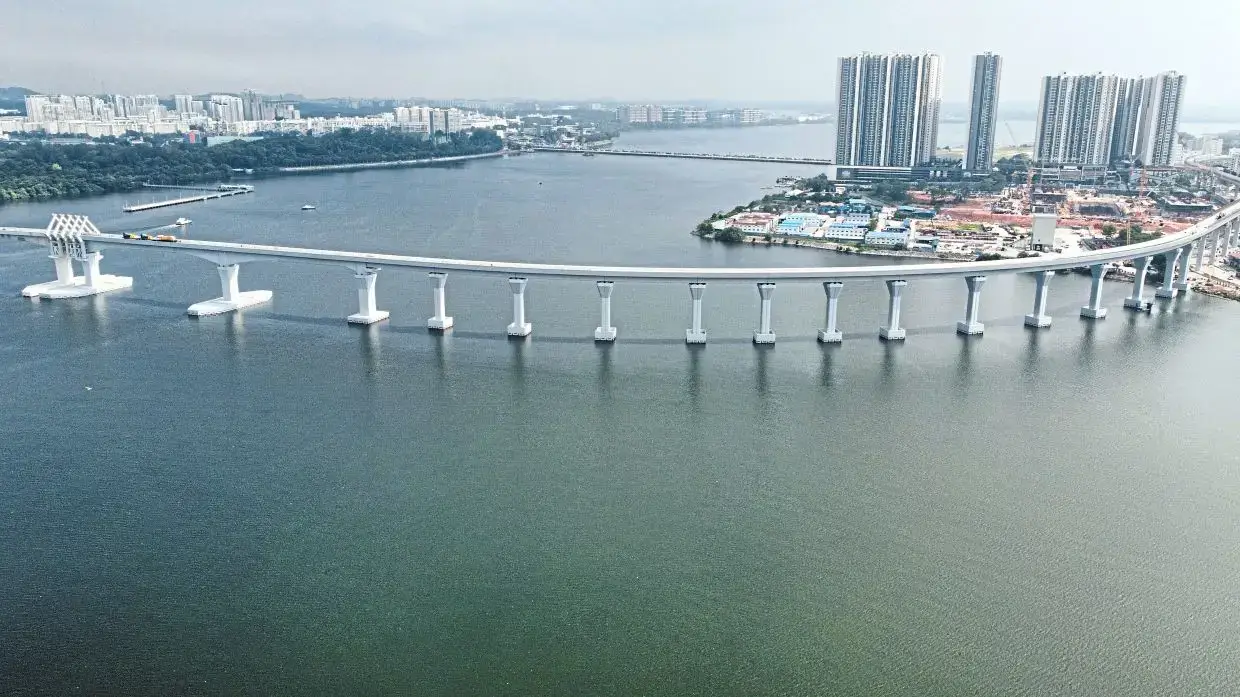
The Johor Bahru–Singapore RTS Link is one of the most significant infrastructure catalysts affecting the southern residential market.
Connecting Bukit Chagar in Johor Bahru with Woodlands North in Singapore, the rail link is designed to improve cross-border passenger connectivity and reduce dependence on road-based commuting.
Its property-market significance extends beyond developments immediately surrounding the Bukit Chagar terminal.
Improved access may increase the appeal of residential areas where Malaysian households can live in Johor while working in Singapore.
Cross-border income differences are particularly relevant to landed housing demand.
CBRE|WTW southern region senior director Jonathan Lo Kin Weng noted that Malaysian commuters earning Singapore-dollar salaries often have greater purchasing power in the Johor housing market.
This supports demand for selected double-storey terrace houses and established residential townships.
However, the anticipated benefits of the RTS Link are not distributed equally across the market.
Properties near transport connections may attract stronger interest, but buyers must still consider actual commuting convenience, purchase prices and future competition.
JS-SEZ and Industrial Investment Create New Housing Demand
The Johor–Singapore Special Economic Zone represents another major driver behind the state’s residential development pipeline.
The initiative aims to strengthen cross-border economic cooperation and attract investment into higher-value industries.
Johor’s government is targeting more than 200,000 new job opportunities by 2030, including over 100,000 higher-paying positions associated with the JS-SEZ.
Meanwhile, Johor recorded approximately RM59.4 billion in approved investments during the first half of 2026, placing it among Malaysia’s leading investment destinations.
These developments could support the creation of new households, particularly around manufacturing, logistics and digital infrastructure clusters.
Kulai, Senai and Sedenak are emerging as important industrial and technology corridors, while Pasir Gudang and Tanjung Langsat remain established manufacturing and logistics centres.
In Sedenak, large-scale developments such as Sedenak Tech Park and the 7,290-acre Ibrahim Technopolis are expanding the area’s industrial and commercial activity.
For nearby residential markets, employment creation may generate demand for housing suited to engineers, technical personnel, managers and industrial workers.
However, approved investment values and employment targets are not equivalent to jobs already created. The actual housing impact will depend on project implementation, recruitment and salary levels.
Landed Homes and High-Rise Apartments Face Different Market Conditions
Johor’s housing expansion is not a single uniform market.
Landed residential properties in established areas such as Tebrau, Iskandar Puteri, Senai and Kulai benefit from demand among family owner-occupiers and buyers seeking more living space.
The rental and resale dynamics of these developments differ from high-rise apartments aimed at investors or short-term tenants.
Johor’s completed high-rise residential overhang declined to 814 units in the first quarter of 2026, compared with 1,071 units in the third quarter of 2025.
However, these figures exclude commercial-titled SOHO and serviced apartment developments.
In that category, Johor still recorded 10,349 completed unsold units as of the first quarter of 2026, with nearly all concentrated in Johor Bahru.
This distinction is important because falling conventional residential overhang does not necessarily mean the broader high-rise accommodation market has fully recovered.
Future apartment completions could also increase rental competition, particularly around the RTS corridor where numerous projects are targeting similar tenant groups.
What Johor’s Housing Pipeline Means for Property Buyers
For owner-occupiers, Johor’s expanding residential supply may offer more choices across established townships and emerging employment corridors.
Buyers should prioritise locations that match their actual workplace, family requirements, commuting arrangements and household budget.
For investors, the considerations are different.
New employment opportunities may strengthen tenant demand, but additional housing supply can also place pressure on rental growth and occupancy.
Properties marketed around the RTS Link or JS-SEZ should therefore be assessed using realistic rental evidence rather than projected infrastructure benefits alone.
Maintenance charges, property classification, vacancy periods and competition from neighbouring developments can materially affect net returns.
Johor’s Next Property Cycle Depends on Real Housing Absorption
Johor’s nearly 115,000-home pipeline demonstrates the scale of residential development being planned alongside the state’s industrial and infrastructure expansion.
The RTS Link, JS-SEZ and new manufacturing investments provide credible foundations for future demand, particularly where employment growth translates into permanent households.
However, Johor Bahru’s serviced apartment overhang and substantial upcoming supply remain important considerations.
The defining issue for Johor’s property market through 2030 will be whether new jobs, household formation and purchasing power grow sufficiently to absorb the homes being delivered.
Developments aligned with genuine occupier needs, realistic pricing and established employment centres are better positioned to compete than projects relying primarily on expectations of future capital appreciation.