Data Centre Proposed Near Bohol Flood Pond as KL Reviews Residential Land Use
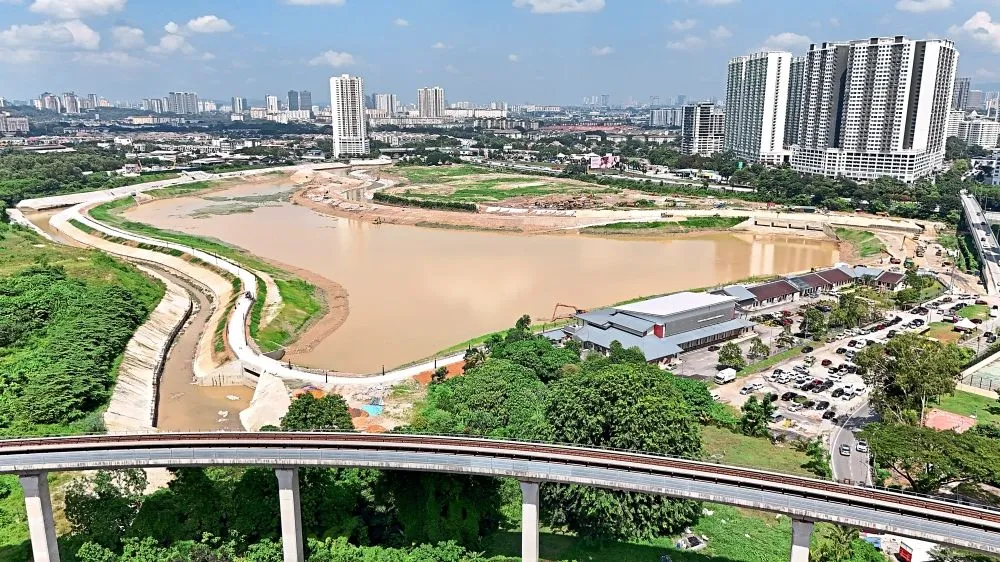
A data centre is being considered on land beside the Kampung Bohol Flood Detention Pond in Kuala Lumpur, potentially replacing part of a previously planned private condominium development near the Shah Alam Expressway (KESAS).
The proposal remains at an early stage. According to a report published by The Star on 16 November 2026, the developer has held preliminary discussions with Kuala Lumpur City Hall (DBKL), but no formal application for land-use conversion has been submitted.
The affected site forms part of a 10.83-hectare mixed residential development comprising six plots, including land allocated for private condominiums, Rumah WIP and Rumah MADANI affordable housing.
Community groups have raised concerns about whether a data centre could place additional pressure on electricity and water infrastructure or affect the flood detention pond’s long-term operation.
The discussion introduces an important planning question for Kuala Lumpur: whether land originally designated for housing should be converted to accommodate the city’s expanding digital infrastructure industry.
Developer Considers Replacing Private Condominiums With Data Centre
The proposed change concerns one or more of three land parcels originally designated for private residential development on Lot 102996.
The developer confirmed that it was examining the possibility of a data centre on plots closest to the highway.
According to its spokesperson, a data centre could potentially generate fewer daily vehicle movements than a high-density condominium development accommodating hundreds or thousands of residents.
However, the developer acknowledged that the land remains designated for residential use and any change would require the necessary conversion and planning approvals.
A senior DBKL officer confirmed that preliminary discussions had taken place but emphasised that no formal application had been received.
Seputeh MP Teresa Kok also confirmed the discussions after checking with City Hall.
These statements establish that the proposal is under consideration, not that DBKL has approved a change in land use.
Six Plots Include Private Housing and Affordable Homes
The land surrounding Kampung Bohol Flood Detention Pond was alienated in 2024 under an arrangement involving six residential parcels.
Plots 1 and 4, measuring approximately 1.92 hectares each, are earmarked for Rumah WIP affordable housing.
Plot 6, covering approximately 1.21 hectares, is designated for Rumah MADANI housing.
The remaining three plots are allocated for private condominiums. Plots 2 and 3 each measure approximately two hectares, while Plot 5 covers 1.78 hectares.
Any data centre proposal would involve changing the permitted use of at least part of this residential land.
Importantly, the developer remains obligated to deliver the affordable housing components under the original arrangement.
The land alienation also required the developer to upgrade the adjoining flood detention pond and park, initially estimated at RM40 million, alongside payment of RM41.7 million in land premium.
The proposed data centre does not automatically remove these existing obligations.
Bohol Flood Detention Pond Is Already Operational
The potential development is attracting attention partly because of its proximity to important flood mitigation infrastructure.
The Kampung Bohol Flood Detention Pond has undergone upgrading works to improve its ability to manage excess stormwater from surrounding catchments.
According to a separate update published by The Star on 16 November, the pond is already operational, although landscaping and recreational facilities remain under construction.
The adjoining park is planned to include a two-kilometre walking path, landscaped areas and a pedestrian bridge connecting surrounding communities.
The contractor is targeting handover to the authorities by the end of November 2026.
Project expenditure has reportedly increased to more than RM70 million following additional landscaping and walkway requirements.
The pond receives water through channels associated with Sungai Kuyoh, Sungai Bohol and Anak Sungai Bohol before controlled discharge towards Sungai Klang.
Its operation makes the surrounding land-use discussion particularly sensitive because future development must be assessed against the pond’s drainage and flood protection functions.
Residents Question Water, Electricity and Environmental Requirements
Community organisations have called for greater transparency before any data centre proposal proceeds through the approval process.
The Joint Committee to Preserve the Bohol Flood Detention Pond raised concerns about electricity demand, water consumption and the suitability of locating intensive digital infrastructure close to residential neighbourhoods.
Kuala Lumpur Residents Action for Sustainable Development Association similarly questioned whether existing utility networks could accommodate additional demand without affecting nearby communities.
Other concerns include heat, noise from cooling equipment, backup generators and potential changes to drainage or stormwater movement.
Save Kuala Lumpur has urged authorities to disclose the project’s expected resource requirements and consult surrounding residents before approving any development.
These concerns do not establish that the proposed facility would necessarily damage the pond or disrupt neighbourhood infrastructure.
The actual impact would depend on the facility’s capacity, cooling technology, design, utility connections and applicable technical assessments.
Without a formal development application, these specifications remain unknown.
Bukit Jalil Is Already Attracting Data Centre Investment
The proposal emerges as Kuala Lumpur attracts increasing interest in digital infrastructure.
Data centre construction is already taking place in Bukit Jalil, including around Technology Park Malaysia.
Malaysian Resources Corporation Bhd has also proposed an artificial intelligence-ready data centre investment of approximately RM2.1 billion in Bukit Jalil.
These projects reflect a wider national expansion in cloud computing and digital infrastructure.
However, data centres have different planning requirements from conventional offices, factories or residential developments.
Electricity capacity, cooling systems, water requirements, network connectivity and continuous operations are important factors when assessing suitable sites.
For Kuala Lumpur, the challenge is ensuring that digital investment can be accommodated without placing unreasonable pressure on established residential areas or essential public infrastructure.
What the Proposal Means for Nearby Property Owners
For residents around Kampung Bohol, the proposed change could alter the character of land previously expected to accommodate private housing.
A data centre would generally create a different pattern of daily activity from a condominium development.
It may involve fewer regular occupants and vehicle movements, but potentially greater electricity requirements and different mechanical equipment.
Neither development type is automatically preferable without considering the surrounding neighbourhood.
For existing property owners, the most relevant issues are environmental compatibility, infrastructure capacity, access arrangements and continued protection against flooding.
There is currently insufficient information to determine whether the proposal would positively or negatively affect nearby residential values.
DBKL Approval Will Determine the Next Stage
The Kampung Bohol proposal remains a preliminary development concept rather than an approved data centre project.
Any formal application would require assessment of land-use compatibility, planning controls, utility requirements and the potential implications for flood mitigation infrastructure.
The developer must also continue meeting its obligations concerning affordable housing and the adjoining public facilities.
The next meaningful milestone will be whether a formal land-use conversion application is submitted to DBKL and what technical information accompanies it.
For Kuala Lumpur, the broader issue is ensuring that new digital infrastructure development remains compatible with existing housing, community needs and critical flood protection assets.